The New Luxury: Why 'Mountain Wellness' and Interior Plant Staging Form the Ultimate First Impression in Jackson Hole Real Estate
When stepping inside a multi-million-dollar estate on the West Bank or a minimalist luxury chalet in Shooting Star, what defines a true luxury "sense of arrival"? Historically, it was the sweeping views of the Tetons, custom reclaimed-timber trusses, or hand-laid stone fireplaces.
But today, high-end buyers and luxury renters are looking for something deeper. They are looking for an immediate feeling of health, vitality, and sanctuary.
Enter the rise of premium interior plant staging—the missing design layer that bridges world-class alpine architecture with the restorative power of nature.
The Post-COVID Green Revolution
It’s no secret that our relationship with our homes fundamentally shifted after COVID-19. Locked inside, millions of people worldwide looked for ways to reconnect with the natural world, triggering a massive, global indoor plant boom. What started as a pandemic hobby quickly matured into a permanent shift in high-end interior design.
We realized that four walls and a roof aren't enough; we need living, breathing elements to make a house truly feel like a home.
In the luxury real estate market, this post-pandemic phenomenon reshaped buyer expectations. Today’s ultra-high-net-worth buyers don't just want a visually stunning property—they want an environment optimized for physical and psychological well-being.
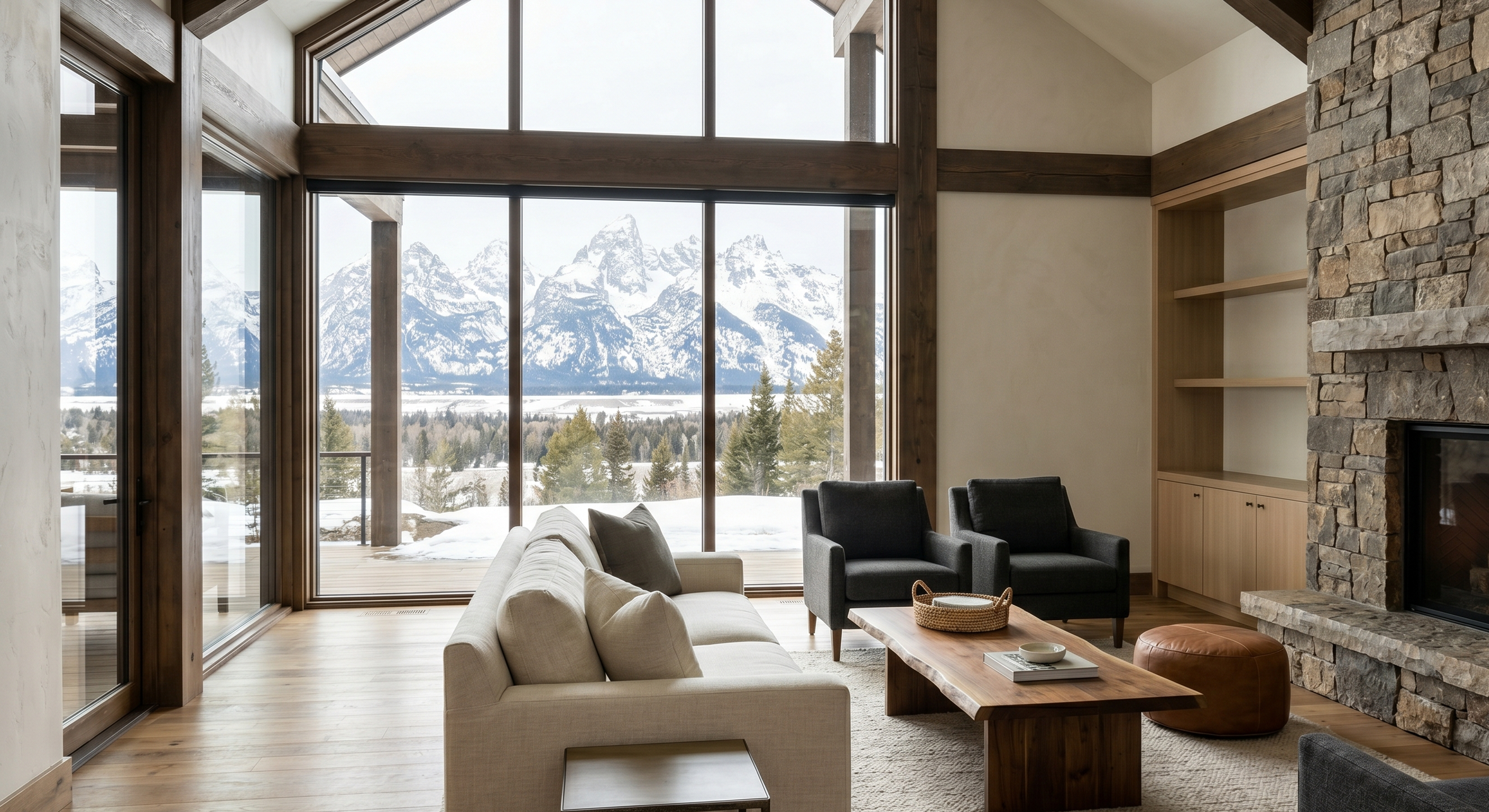
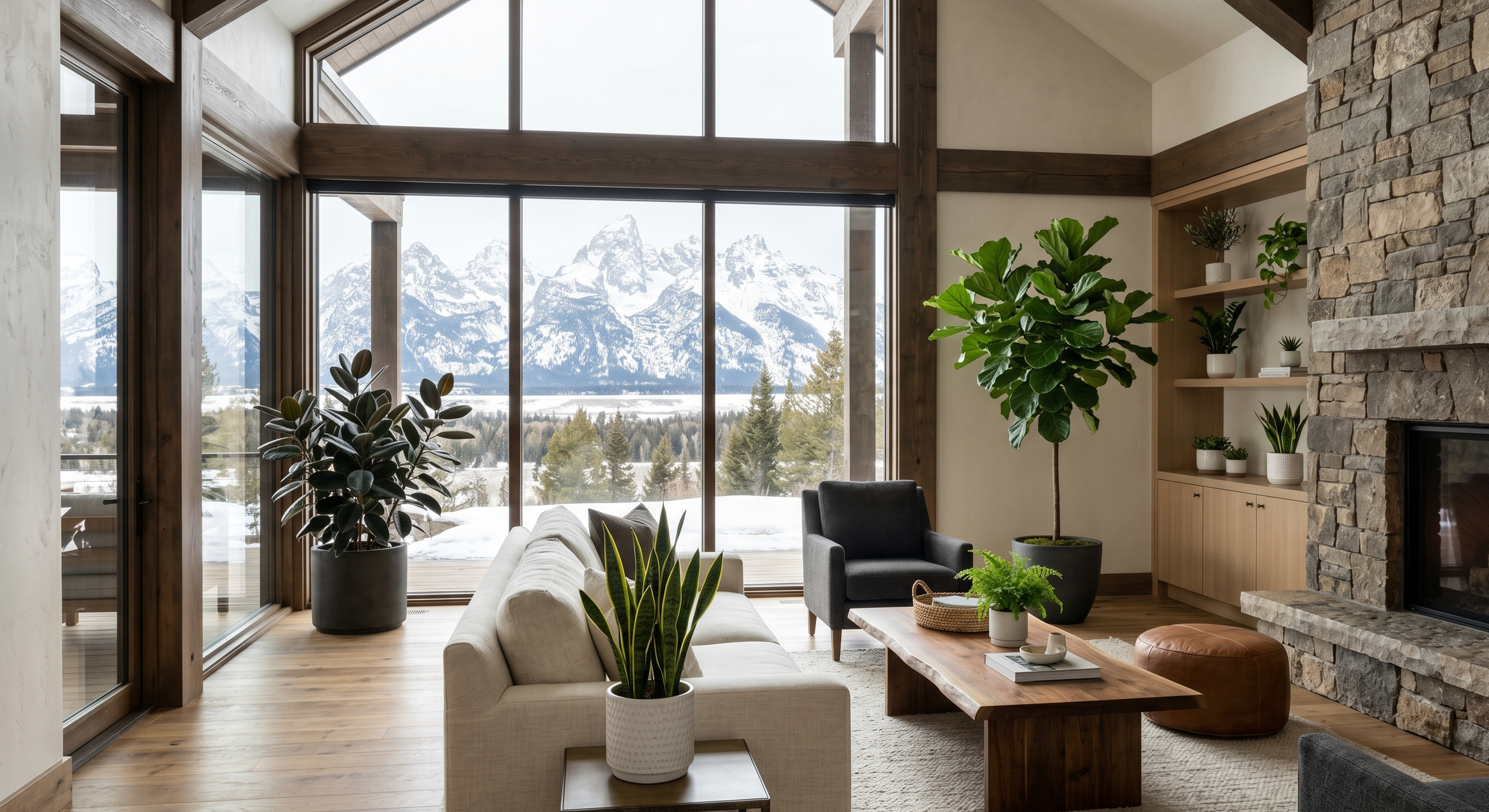
Catering to the "Mountain Wellness" Mindset
People don't move to Jackson Hole just to buy real estate; they move here to buy a lifestyle rooted in wellness, longevity, and a deep connection to the rugged Wyoming landscape. They spend their days skiing Teton Village or hiking the backcountry to soak in the raw, restorative energy of the mountains.
When they step indoors, they don't want that connection to stop.
Integrating mature, structural indoor plants—such as glossy Burgundy Rubber Trees, striking architectural Snake Plants, or cascading Ponytail Palms—is the ultimate expression of the "Mountain Wellness" aesthetic. This philosophy, known in design circles as biophilic design, physically manifests health and tranquility inside a home.
Mature greenery does more than just soften the sharp lines of modern-western steel and glass. Living plants actively improve indoor air quality by filtering toxins, raising ambient oxygen levels, and boosting humidity—a critical luxury amenity during our dry, forced-air Wyoming winters. For a discerning buyer, a home staged with vibrant, living greenery feels immediately healthier, warmer, and more inviting than a vacant property or one staged with cold, static furniture.
The Jackson Hole Challenge: Visual Perfection without the Friction
While every top-producing real estate agent and property manager knows that living trees make spaces look breathtaking in listing photos and guest arrivals, keeping tropical assets alive in Jackson Hole is notoriously difficult. Our sub-zero winter temperatures, short daylight hours, and desert-dry indoor heat can cause traditional tropical plants to drop leaves and brown at the edges almost overnight.
Furthermore, the absolute highest priority in a $15 Million estate is protecting the property. No owner or broker wants to risk water damage on custom, hand-scraped hardwood floors from a leaking nursery pot.
That is exactly why we created our Turn-Key Interior Plant Staging and Rental Service.
We handle the entire botanical heavy lifting so you don't have to. Our curated fleet of low-humidity, resilient specimen trees are grown and prepped in our private climate-controlled environments. We white-glove deliver and extract them seamlessly within standard property turnover windows, utilizing a strict, multi-tiered Property Protection Protocol that guarantees zero moisture impact on high-end floors.
Elevate Your Next Property Staging
In a market as competitive as Jackson Hole, luxury is defined by the details. By aligning your property with the mountain wellness movement, you aren't just selling square footage—you are selling a vibrant, healthy lifestyle.
Are you a local real estate broker prepping a world-class listing for a photoshoot, or a property manager looking to offer an exclusive, revenue-generating amenity to your guests? Contact us today to explore our custom plant staging packages and request our digital Lookbook.

What Hardiness Zone is Jackson?
Wyoming USDA Plant Hardiness Zone Map
Our beautiful landscape betrays an unrelenting and harsh reality for much of the endemic life here. Jackson can be a cold and unforgiving place for the unprepared! The winters are long and intense, with snow having fallen on every single calendar day of the year. This isn’t a rare occurrence either, with Jackson receiving inches of snow in August of 2024. Usually there is more snow on the ground than not, if you consider all the months in a year.
With that said, Jackson’s climate is considered semi-arid/alpine. We have very low humidity, which helps us achieve the dry powder snow that brings people from all over the world to ski the Tetons and beyond. However, that’s not to say we get very much rain in the summer months!
Jackson is considered Zone 4b by the U.S.D.A Plant Hardiness Zone map. The zones are “based on the average annual extreme minimum temperature during a 30-year period in the past, not the lowest temperature that has ever occurred in the past or might occur in the future”, per the USDA website. They tend to form horizontal bands across the United States, with the lower number zones in the North, and higher number zones towards the South.
But how does the climate affect the gardens here? Well, it means we generally have a pretty short growing season. Growing many vegetables can prove to be a challenge, and many perennials take quite a while to bloom. In fact, some plants that we consider annuals here are actually perennials in other zones. For example, take sweet potato vine, a common plant found in hanging baskets and planters around town. They look beautiful, and add some nice trailing and foliage elements to hanging baskets, which tend to be dominated by smaller flowers. But they can easily wither if we get a surprise frost cycle, as they don’t tolerate the cold well at all. These vines are perennials in their native range of Polynesia.
In the end, we can’t control the weather. No plant is 100% safe from Jackson’s climate. But knowing the correct zone of your garden is invaluable when considering plants for gardening in Jackson.
Maybe that hibiscus in the catalog isn’t the move, even though I desperately wish it was!